What is the meniscus?
Each knee has two menisci: C-shaped cushions of cartilage between the thigh bone and the shin bone. One sits on the inner side (medial meniscus) and one on the outer side (lateral meniscus). They spread load across the joint surface, absorb shocks and help keep the knee stable.
Only the outer edge of the meniscus has a blood supply; the inner parts do not. This is why the position of a tear directly affects whether it can heal on its own or after stitching.
What are the symptoms?
- Pain along the joint line on the inner or outer side of the knee
- Pain that gets worse when squatting, twisting or using stairs
- Swelling that develops over a few hours or days
- A catching or clicking feeling
- The knee locking at a certain angle and not straightening fully
How is a meniscus tear diagnosed?
During the examination we check where the pain is and carry out tests specific to the meniscus. An MRI scan shows where the tear is, its shape and whether it can be stitched. In older patients, an X-ray of the knee taken while standing helps us see how much osteoarthritis there is.
A tear on an MRI scan is not always the cause of your symptoms. Many people without any symptoms also have wear-related tears on MRI. This is why we base the decision on the examination and your symptoms, not on the MRI report alone.
Does every tear need surgery?
No. For wear-related tears, the first choice is often physiotherapy and exercise. There are studies showing that removing the torn part with keyhole surgery does not add clear benefit over a regular exercise programme for these patients. When pain is severe, an ultrasound-guided joint injection can make it easier to take part in exercise.
Some traumatic tears that are small, stable and in the area with a blood supply can also heal on their own or cause no symptoms.
What does non-surgical treatment involve?
Non-surgical treatment does not mean leaving your knee alone. Together with the physiotherapist, we plan a programme that strengthens the muscles around the knee and balances the load on it.
- Exercises to strengthen the front and back thigh muscles and the hip muscles
- Balance and single-leg control training
- Activities that are easy on the knee, such as cycling and swimming
- Avoiding deep squats and sudden turns for a while
- Support with weight loss if you are overweight
When is surgery needed?
- The knee locks and will not straighten (for example a large displaced tear, called a bucket-handle tear); in this case surgery should not be delayed
- A traumatic tear in a young person that can be stitched
- A meniscus tear that comes with an ACL tear
- A tear at the root, where the meniscus attaches to the bone
- Catching and other mechanical symptoms that continue despite appropriate treatment
Repair or partial removal?
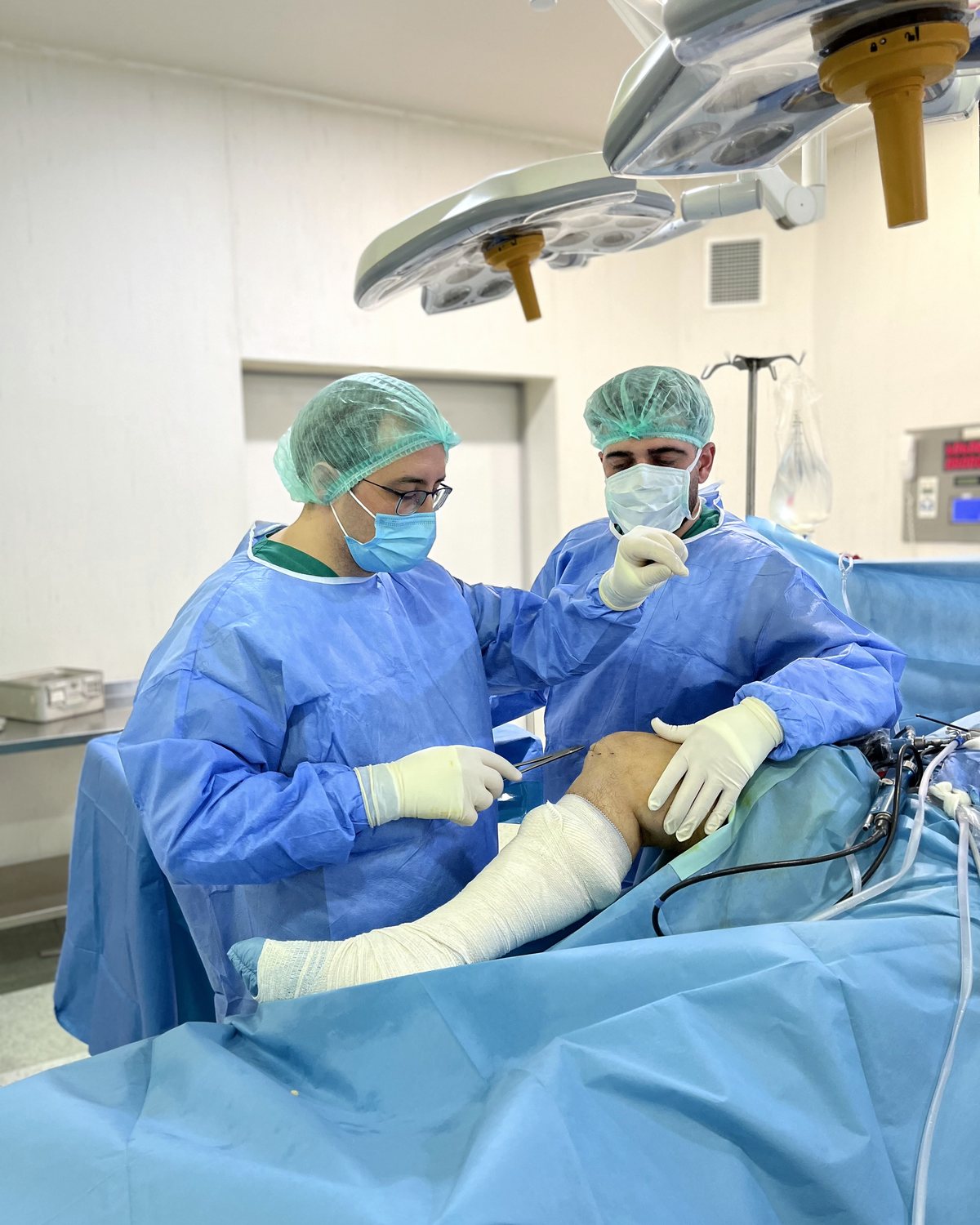
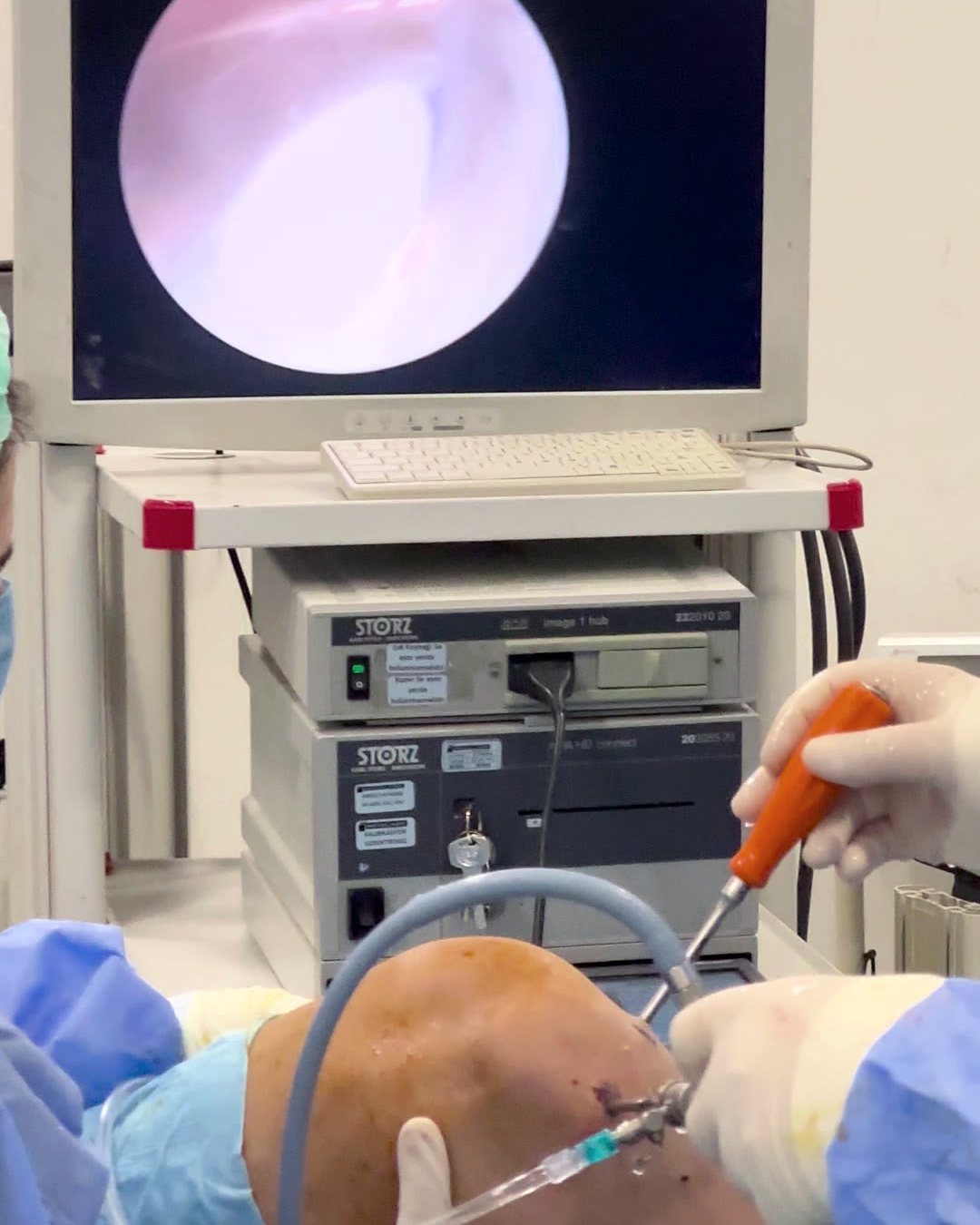
We carry out the operation as keyhole surgery (arthroscopy), using a camera through small cuts. Our priority is to preserve the meniscus, because losing meniscus tissue increases the risk of knee osteoarthritis later. If the tear is in the area with a blood supply and the tissue is healthy, the meniscus is stitched (meniscus repair).
If a tear cannot be stitched, only the torn and unstable part is removed, and the healthy meniscus tissue is left in place (partial meniscectomy, or trimming). Removing the whole meniscus is avoided as far as possible.
What is recovery like after surgery?
After partial removal, most patients walk on the same day. They usually return to daily life within 1–2 weeks and to sport within a few weeks, with physiotherapy. Recovery after a repair takes longer. Usually, weight-bearing and knee bending are limited for 4–6 weeks, and returning to sport takes a few months.
In both cases Dr Gürsel and the physiotherapist follow your progress together. Possible risks include infection, fluid building up in the joint, blood clots in the veins and the stitched meniscus not healing.

Reviewed by Dr Enis Gürsel, Orthopaedic and Trauma Surgeon · Last reviewed: 5 November 2026